
Organ Effects and Risks
Systemic Impacts Can Be Debilitating and Reduce Patient QoL1-15
Learn about the impact on each organ system using these links.


RENAL EFFECTS AND RISKS
Renal System Effects Are Common and Clinically Significant1-3
PTH deficiency interferes with calcitriol synthesis, calcium reabsorption, and urinary phosphate excretion, increasing the risk of renal dysfunction.4-6
Risks observed in patients with hypoparathyroidism2,3,7
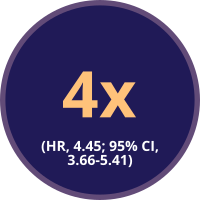
GREATER RISK OF
CHRONIC KIDNEY DISEASE
for patients with chronic hypoparathyroidism7*
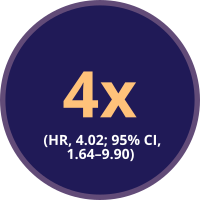
GREATER RISK OF
NEPHROLITHIASIS
for patients with postsurgical hypoparathyroidism3†
Plus, greater risk of renal insufficiency:
3x greater
(HR, 3.10; 95% CI, 1.73-5.55) in postsurgical patients
with hypoparathyroidism3†
6x greater
(HR, 6.01; 95% CI, 2.45-14.75) in nonsurgical patients
with hypoparathyroidism3‡
Risk of declining kidney function increases over time8
*All patients were taking calcitriol, and some were also taking calcium supplements.7
†Each patient was compared with 3 gender- and age-matched controls (± 2 years) from the general background population. Most patients were taking calcium
supplements (93%) and/or active vitamin D analogs (93%).3
‡Patients were compared with gender- and age-matched controls (± 2 years) from the Civil Registration System using the incidence-density sampling technique. Calcium supplements and active vitamin D analogs were taken by 71% and 70% of the patients, respectively.2

SKELETAL EFFECTS AND RISKS
Patients Are at Higher Risk of Bone Pain and Fractures9,10
PTH deficiency in hypoparathyroidism leads to reduced
bone turnover1,10
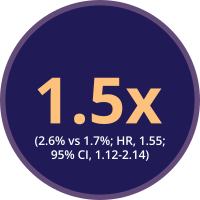
GREATER RISK OF
VERTEBRAL FRACTURES
in a Swedish national cohort of patients with
hypoparathyroidism10*
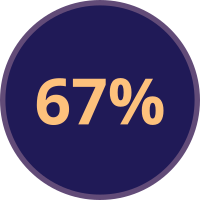
of patients reported
JOINT AND BONE PAIN
during the preceding 12 months in a
patient survey9†
*All patients were taking calcitriol, and some were also taking calcium supplements.10
†Based on a cross-sectional survey that analyzed the burden of disease associated with hypoparathyroidism, with specific emphasis on the clinical and social impacts on patients’ quality of life (N = 374). Calcium, either alone or in combination with other agents, including active vitamin D, was used by 92% of patients.9

CARDIOVASCULAR EFFECTS AND RISKS
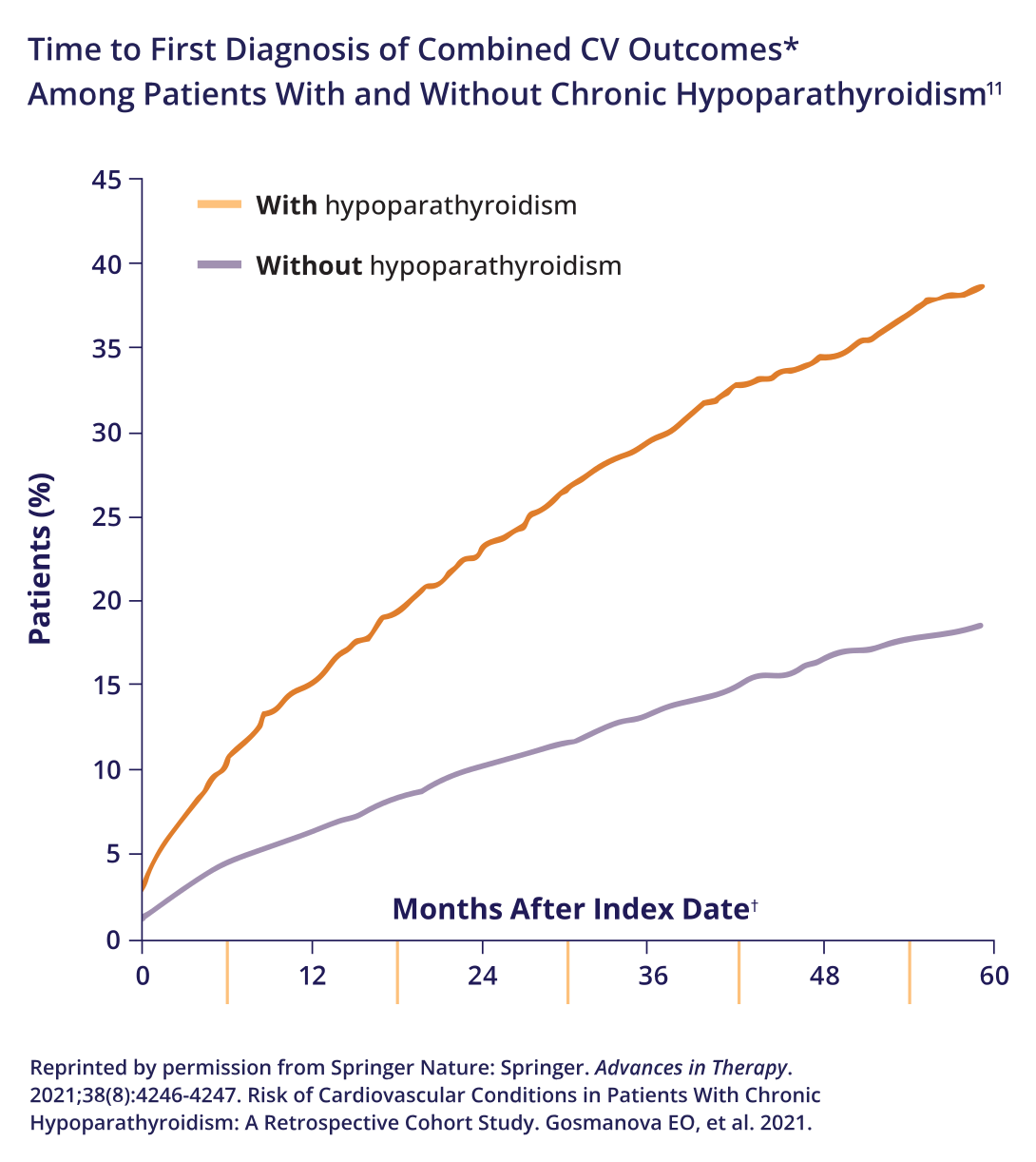
Significantly Increased Risk of CV Events11
With low PTH, calcium homeostasis is disrupted, which can lead to adverse CV outcomes
Adverse CV outcomes
Patients with hypoparathyroidism have a significantly higher risk of
8 adverse CV outcomes11
- Atrial fibrillation
- Cerebrovascular disease
- Coronary artery disease (CAD)
- Peripheral vascular disease (PVD)
- Stroke
- Heart failure (HF)
- Tachyarrhythmia
- Combined CV outcome*
Based on a 5-year, retrospective cohort study that examined the association between chronic hypoparathyroidism and the risk of various incident CV outcomes (N=48,582) using medical insurance claims.
2.6x
GREATER RISK OF
COMBINED CV OUTCOMES11
(P<0.001)
(HR, 2.60; 95% CI, 2.43-2.77)
Elevated calcium phosphate is associated with vascular calcifications, which increases the risk of CV mortality.11,12
2.6x
GREATER RISK OF
COMBINED CV OUTCOMES11
(P<0.001)
(HR, 2.60; 95% CI, 2.43-2.77)
*Combined CV outcome included 1 or more of the following: cerebrovascular disease, CAD, HF, and PVD.11
†The index date was defined as the date of the first repeat diagnosis of hypoparathyroidism at least 6 months after the initial hypoparathyroidism diagnosis, or the date of an eligible, randomly selected claim for the patients without hypoparathyroidism.11

CENTRAL NERVOUS SYSTEM AND NEUROPSYCHIATRIC EFFECTS AND RISKS
CNS Impacts Are Well Documented and Can Be Profound1,6,9,13-15
The combination of high phosphorus and high calcium-phosphate product drives the formation of calcium deposits in brain tissue.
IMPACT ON LIVES OF PATIENTS WITH HYPOPARATHYROIDISM
Cognitive Deficits (“Brain Fog”)14
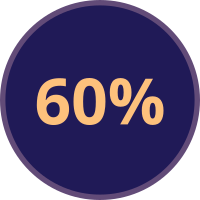
REPORTED DEFICITS IN
EXECUTIVE FUNCTION
vs 17% in the control group
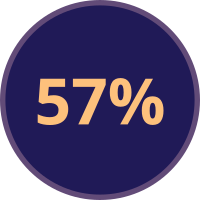
REPORTED DEFICITS IN
ATTENTION AND PROCESSING SPEED
vs 3% in the control group
STUDY DESIGN:
Based on a cohort of 30 patients in Austria with hypoparathyroidism who were compared with a group of 30 matched healthy controls. Cognitive performance assessments included the Trail Making Test Part A/B, the
Mood Disorder9
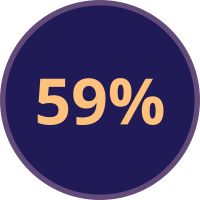
REPORTED
ANXIETY
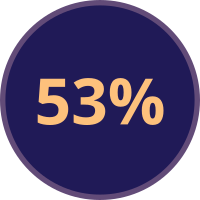
REPORTED
DEPRESSION
STUDY DESIGN:
Based on a cross-sectional survey that analyzed the burden of disease associated with hypoparathyroidism, with specific emphasis on the clinical and social impacts on patients’ quality of life (N=374). Calcium, either alone or in combination with other agents, including active vitamin D, was used by 92% of patients.9